
Lifestyle
Mt_13th10 Explained: Meaning, Context, Uses, and Safety


Mt_13th10 is an unusual keyword that looks meaningful but does not currently identify one universally recognized person, product, platform, or technical standard. Its letter-number structure resembles a Bible reference, while its underscore and compact formatting also make it look like a username, internal tag, file name, or digital alias.
That ambiguity explains the search interest. People who encounter the term often want to know what it means, whether it belongs to a real account or service, and whether clicking content associated with it is safe. The most responsible answer is evidence-based: the surrounding context determines the meaning.
What Is Mt_13th10?
At present, Mt_13th10 is best described as a context-sensitive identifier rather than an established dictionary term. Publicly indexed results reviewed for this article do not establish it as the official name of a mainstream application, registered technology, major company, or recognized internet protocol.
The strongest readable interpretation is Matthew 13:10. Merriam-Webster recognizes “Mt” as an abbreviation for Matthew, and Matthew 13:10 is the verse in which the disciples ask Jesus why he speaks to the crowds in parables.
Still, that interpretation is not automatic. The same string could be used privately as:
- A social media username
- A gaming handle
- A forum identity
- A project label
- A file or folder name
- A content tag
- A personal reference understood only by its creator
The practical rule is simple: do not assign a fixed meaning until you know where the term appeared.
Why Mt_13th10 Looks Like a Bible Reference
The formatting provides several clues. “Mt” is a recognized abbreviation for the Gospel of Matthew, while “13” and “10” naturally map to chapter 13, verse 10. The underscore may simply replace punctuation that usernames, file systems, or platform naming rules do not allow.
A conventional Bible reference would normally appear as Matthew 13:10, Matt. 13:10, or Mt 13:10. A platform-friendly transformation could become “Mt_13_10,” “Mt13v10,” or the more stylized “Mt_13th10.”
This does not prove that every use is religious. It does, however, make the biblical reading more linguistically plausible than unsupported claims that the term is a secret application, software update, hacking tool, or branded service.
Mt_13th10 and the Meaning of Matthew 13:10
Matthew 13 is built around teachings commonly described as the parables of the kingdom. In verse 10, the disciples approach Jesus and ask why he speaks to the people in parables.
The question opens a larger explanation about hearing, understanding, spiritual receptivity, and the “mysteries of the kingdom of heaven.”
The Immediate Context
Before verse 10, Jesus tells the Parable of the Sower. Seed falls on a path, rocky ground, thorny ground, and good soil. The story creates a vivid framework for understanding how people receive the same message differently.
Then comes the disciples’ question. Why use a parable instead of a direct explanation?
The answer develops across Matthew 13:11–17. According to the chapter notes published by the United States Conference of Catholic Bishops, this section explains the purpose of parabolic speech, the difference between receptive and unreceptive hearers, and the responsibility associated with understanding.
Why Parables Matter
A parable communicates through comparison. It takes familiar material—soil, seeds, weeds, bread, treasure, and fishing—and uses it to reveal a deeper truth.
That method does two things at once. It makes an idea memorable, but it also requires attention. A casual listener may remember only the surface story, while a reflective listener asks what the story reveals.
For that reason, someone choosing Mt_13th10 as a handle may be signaling themes such as:
- Looking beyond surface appearances
- Seeking spiritual understanding
- Learning through symbols and stories
- Distinguishing hearing from understanding
- Valuing insight, reflection, or discernment
- Identifying with Christian scripture
Those associations are reasonable possibilities, not confirmed facts about an unknown account holder.
Other Possible Meanings of Mt_13th10
The biblical interpretation is strong, but it is not the only possible explanation.
A Username or Digital Handle
The combination of letters, an underscore, and numbers fits common username conventions. People often build handles from initials, birthdays, favorite verses, meaningful dates, team numbers, or phrases unavailable in their original form.
In this setting, Mt_13th10 may reveal very little publicly. The “Mt” could be initials. “13th” could refer to a date, rank, edition, anniversary, or personal milestone. “10” could be a birth month, jersey number, version number, or random addition used to secure an available username.
Never infer a person’s identity, religion, age, location, or intentions from the handle alone.
A Project Code or Internal Label
Teams use compact labels to organize drafts, experiments, campaigns, builds, and datasets. A string such as “MT_13th10” could mean “module test,” “milestone tracker,” “maintenance task,” or something entirely organization-specific.
Internal codes are often opaque by design. Search engines cannot decode them unless documentation, repository notes, release pages, or the creator provides a definition.
A File Name, Tag, or Content Marker
Underscores are common in file names because they preserve readability without spaces. A creator might use the keyword to name an image, video, document, sermon note, study guide, or scheduled post.
Check the file extension and surrounding folder structure. A name ending in .jpg, .mp4, .pdf, .docx, or .zip is more likely to be a file label than a public brand.
A Stylized Date or Sequence
“13th10” may represent the thirteenth day of the tenth month, the tenth item in a thirteenth collection, or a personal date format. The order remains unclear because countries write dates differently.
Without context, converting the string into a calendar date would be guesswork.
How to Identify the Correct Meaning
Do not start with the keyword in isolation. Start with the environment in which you found it.
1. Examine the Platform
A term in a Bible-study post carries different clues from the same term in a game lobby, code repository, shopping page, or file directory.
On social media, inspect the biography, post topics, linked pages, and profile history. In a document, inspect the heading, author, nearby references, and file metadata.
2. Look for Supporting Language
Words such as parable, scripture, Gospel, kingdom, disciples, verse, faith, teaching, Matthew, or Bible study strongly support the Matthew 13:10 interpretation.
Words such as build, version, patch, module, deployment, ticket, or repository suggest an internal technical label instead.
3. Preserve the Exact Formatting
Search the exact string in quotation marks. Then test close variations such as:
- “Mt 13:10”
- “Matthew 13:10”
- “Mt_13_10”
- “MT13th10”
- “Mt13v10”
Small formatting differences can separate a biblical reference from a username or unrelated code.
4. Find the Earliest Reliable Source
A copied explanation is weaker than an original profile, official document, verified repository, or primary text. When several low-quality pages repeat the same claim without evidence, repetition does not make that claim true.
For the biblical interpretation, use recognized reference works and the chapter itself. For a brand, app, or product claim, look for an official website, verified publisher listing, trademark record, developer documentation, or reputable store page.
5. Measure Confidence Instead of Forcing Certainty
A useful interpretation framework is:
| Evidence found | Most likely interpretation | Confidence |
|---|---|---|
| Scripture language and Matthew references | Matthew 13:10 | High |
| Profile name with no religious context | Username or alias | Medium |
| Repository, ticket, or build documentation | Internal project code | High |
| Standalone mention on a thin-content page | Unconfirmed | Low |
| File extension or folder path | File or content label | Medium to high |
This approach is more accurate than presenting one theory as an established fact.
Is Mt_13th10 Safe?
The keyword itself is not inherently dangerous. A text string cannot infect a device, steal credentials, or compromise an account merely because it appears in a search result.
The risk comes from the page, file, account, or download associated with it. An unfamiliar keyword can be used by low-quality publishers, impersonators, phishing pages, or download sites to attract curious visitors.
Before interacting with content connected to Mt_13th10, check:
- Whether the domain name matches the claimed organization
- Whether the page provides a real author and editorial information
- Whether contact details are consistent and verifiable
- Whether the site forces notifications, redirects, or downloads
- Whether a profile has a credible posting history
- Whether a file type matches what was promised
- Whether the page requests passwords, payment, or personal data without a clear reason
Be particularly cautious with executable files, browser extensions, APK packages, compressed archives, and “verification” downloads. Do not install software simply because a page claims the keyword is connected to a special tool or update.
Common Misinterpretations to Avoid
Ambiguous keywords create an information vacuum. Low-quality content often fills that vacuum with confident-sounding speculation.
Claiming It Is a Confirmed App
There is no reliable basis for calling the term an official application unless an identifiable developer, official listing, documentation page, or verified publisher connects itself to the name.
A page may describe Mt_13th10 as an app simply because users are searching for it. That is not evidence.
Treating One Article as Proof
A web page can rank for an obscure phrase without possessing authoritative information about it. Evaluate its sources, publication identity, supporting evidence, and whether independent primary sources confirm the claim.
An article that cites only other speculative articles is producing an echo, not verification.
Assuming the Username Reveals the Owner
A handle is not proof of a legal name, age, religion, country, profession, or affiliation. Avoid identity speculation and unsupported personal conclusions.
Even an apparently religious username may be used for artistic, cultural, historical, or private reasons.
Confusing Similar “MT” Terms
“MT” has numerous established meanings, including Matthew, mount, mountain time, machine translation, metric ton, Montana, and a symbol associated with meitnerium. Merriam-Webster lists several distinct definitions, demonstrating why context is essential.
The existence of tools or products containing “MT” does not automatically connect them to this particular keyword.
How to Evaluate a Website Discussing Mt_13th10
E-E-A-T signals become especially important when researching an obscure or emerging phrase. Search engines may index pages quickly, but indexing does not guarantee accuracy.
Check the Author
Look for a real author biography, relevant experience, editorial contact information, and a history of publishing reliable material.
An anonymous author is not automatically untrustworthy, but unsupported claims deserve greater scrutiny when no accountable person or organization is identified.
Inspect the Evidence
A useful page should distinguish between:
- Confirmed facts
- Reasonable interpretations
- Personal opinions
- Unverified possibilities
- Information that remains unknown
Watch for language such as “definitely,” “official,” “secret,” or “viral” when the page supplies no primary evidence.
Review the Publication Date
An article may appear recent while relying on old, copied, or recycled information. Check whether its sources are current and whether the subject has changed since publication.
For an undefined keyword, the earliest appearance can be more valuable than the newest article because it may reveal the original context.
Check for Commercial Manipulation
Be cautious when an article creates fear or urgency and then directs readers toward:
- A download
- A subscription
- A paid verification service
- A cryptocurrency wallet
- A browser extension
- A suspicious login page
- An unrelated product
The commercial action should make sense in relation to the information provided.
Practical Uses of Mt_13th10 as a Symbol
When deliberately chosen as a personal identifier, Mt_13th10 can work as a compact symbolic phrase. It is short, memorable, and open to interpretation.
A faith-based creator might use it for a scripture-study page, devotional project, podcast episode, journal series, or artwork about parables. A private user might adopt it as a reminder to listen carefully, question surface meanings, and pursue understanding.
For branding, however, ambiguity has costs. New visitors may not know how to pronounce it, type it, or interpret “13th10.”
A creator using the name publicly should add a clear biography or tagline explaining the intended meaning. Examples could include:
- “Exploring the meaning behind the parables”
- “Faith, reflection, and deeper understanding”
- “Inspired by Matthew 13:10”
- “Learning to hear beyond the surface”
A short explanation can improve memorability, trust, and branded search recognition.
The Deeper Lesson Behind Matthew 13:10
When Mt_13th10 is read as Matthew 13:10, its meaning reaches beyond a single question about storytelling. The verse introduces a contrast between exposure to information and genuine understanding.
Two people can hear the same teaching yet respond differently. One dismisses it. Another reflects, asks questions, and connects it to a larger truth.
That distinction remains relevant outside a religious setting. Modern audiences encounter enormous amounts of content but often process only headlines, captions, or fragments.
The principle associated with the verse encourages:
- Active rather than passive listening
- Curiosity before judgment
- Careful interpretation
- Awareness of context
- Willingness to ask deeper questions
- Recognition that understanding requires effort
This may explain why the reference works well as a symbolic username. It communicates an interest in insight without spelling out the entire message.
Search Intent Behind Mt_13th10
Most searches for this phrase are likely informational and navigational. The searcher may have seen it elsewhere and now wants identification, context, or reassurance.
The main questions behind the query usually include:
- What does the term mean?
- Is it connected to Matthew 13:10?
- Is it a real person, platform, or app?
- Why is it appearing online?
- Is the associated page or download trustworthy?
A high-quality answer should resolve those questions without turning uncertainty into fiction. That is especially important for emerging or low-volume keywords, where thin pages can easily create a false sense of consensus.
Informational Intent
The searcher wants an explanation. They may have encountered the phrase in a post, comment, profile, or article and cannot determine what it represents.
This is likely the dominant intent.
Navigational Intent
Some users may be trying to relocate a specific profile, page, video, or file carrying the name. They are not necessarily asking for a definition; they are searching for a destination.
Safety-Checking Intent
Another group may be investigating an unexpected link, unfamiliar account, or download. These users need verification steps rather than speculative background.
Religious Research Intent
Users who recognize the structure may want commentary on Matthew 13:10, the purpose of parables, or the broader message of Matthew 13.
A comprehensive page should satisfy all four possibilities while clearly distinguishing confirmed information from interpretation.
Key Takeaways
- Mt_13th10 does not have one confirmed universal meaning.
- The most plausible textual interpretation is Matthew 13:10.
- In Matthew 13:10, the disciples ask why Jesus speaks to the crowds in parables.
- The keyword may also be a username, personal code, project label, file name, or date-like sequence.
- Context, primary sources, and exact formatting are more reliable than speculation.
- The phrase itself is harmless, but associated links, profiles, and files should still be evaluated carefully.
- A website ranking for the keyword should not be treated as an official source automatically.
Frequently Asked Questions
What does Mt_13th10 mean?
Mt_13th10 most likely represents Matthew 13:10 when it appears in a Christian, biblical, devotional, or scripture-related setting. In other environments, it may simply be a username, file label, project code, or private identifier.
The surrounding content is necessary to determine the correct meaning. Look for religious terms, profile details, technical documentation, or file information before reaching a conclusion.
Is Mt_13th10 a Bible verse?
It is not a standard way of writing a Bible citation, but it closely resembles one. “Mt” is a recognized abbreviation for Matthew, and Matthew 13:10 contains the disciples’ question about why Jesus teaches the crowds through parables.
The conventional forms would be “Matthew 13:10” or “Mt 13:10.” The underscore and “th” may represent personal styling or a platform-friendly variation.
Is Mt_13th10 an app or software tool?
No authoritative public evidence reviewed for this article establishes it as a mainstream app or official software product. A page making that claim should provide an identifiable developer, official documentation, verified app-store listing, or another primary source.
Without that evidence, treat the claim as unconfirmed. Do not download files merely because a website describes the term as a tool, update, or application.
Is it safe to search for Mt_13th10?
Yes. Searching the phrase is not inherently unsafe. The important issue is where a result leads.
Avoid suspicious downloads, credential requests, aggressive redirects, fake security alerts, and pages making extraordinary claims without verifiable sources. Judge each website, profile, and file independently.
Why would someone use Mt_13th10 as a username?
A person may use it because Matthew 13:10 is meaningful to them, because the letters are their initials, or because the numbers represent a date or personal milestone. It may also have no public explanation.
A username alone cannot confirm the owner’s beliefs or identity. Look at the person’s publicly shared biography and content rather than relying on assumptions.
Conclusion: What to Do Next
Treat Mt_13th10 as a clue, not a complete definition. First, identify where you saw it. Then inspect nearby words, profile details, file information, or technical documentation before choosing an interpretation.
When the context is biblical, Matthew 13:10 is the strongest explanation. When the context is social, technical, or organizational, a username or internal label may be more likely.
Verify the original source, avoid unsupported claims, and judge any associated website or download on its own evidence—not on the mystery of the keyword.

If you searched for Usitility vwngvoooyi4, you probably encountered the phrase in a search result, URL, cached page, or article and wondered whether it refers to a program, download code, virus, or hidden feature. The most important finding is simple: there is evidence that Usitility is a real, long-running software website, but there is no solid independent evidence that “vwngvoooyi4” is the name of an official application, malware family, emulator, Windows utility, or Usitility product.
That distinction matters. A strange identifier attached to a recognizable software site can look threatening even when it is simply part of a page path, tracking system, redirect, slug, or old indexed reference. At the same time, a familiar domain name should never be treated as a guarantee that every download, redirect, advertisement, mirror, or third-party installer is automatically safe.
What Is Usitility vwngvoooyi4?
The phrase Usitility vwngvoooyi4 appears to combine the name of the Usitility software-download and tutorial website with an unexplained alphanumeric string. Searches for the exact term produce very little authoritative documentation, and the strongest indexed explanation currently available comes from a third-party article rather than Usitility itself.
That article describes “vwngvoooyi4” as a leftover URL fragment associated with old or redirected pages. However, that explanation is not independently documented by Usitility in the sources available, so it should be treated as a plausible interpretation rather than a proven technical fact.
Usitility, by contrast, has a much clearer public footprint. Third-party domain records describe usitility.com as a software-download site and show a registration date in July 2011, giving the domain a history of roughly 15 years as of 2026. ScamAdviser also identifies the registrant as InDaHouseRulez S.L. in Spain and reports a valid SSL certificate in its recent assessment.
Is Usitility vwngvoooyi4 a Program or App?
There is currently no reliable evidence that Usitility vwngvoooyi4 is a standalone software product. You should not assume that it is an executable file, Android application, browser extension, emulator, game, driver, or system utility merely because the phrase appears near software-related search results.
This is one of the biggest weaknesses in many thin articles targeting unusual search terms: they turn an unexplained identifier into a fictional product description. That creates confusion and can potentially encourage readers to download unrelated files.
A more evidence-based interpretation is to separate the two components. “Usitility” identifies a known software-focused website, while “vwngvoooyi4” remains an unverified identifier whose original function is not clearly documented in authoritative sources.
Why Does Usitility vwngvoooyi4 Look Suspicious?
Random-looking strings trigger suspicion because users are trained to associate unfamiliar characters with malware hashes, shortened links, tracking codes, autogenerated filenames, and phishing URLs. That instinct can be useful, but appearance alone cannot determine whether a link is malicious.
Modern websites routinely generate machine-readable identifiers for analytics, content-management systems, referral tracking, database records, campaign parameters, media assets, and redirects. Search engines may also keep older versions of URLs indexed after a website changes its structure.
One competing explanation for Usitility vwngvoooyi4 says the string may be connected to old indexing, renamed pages, tracking parameters, or browser-cache behavior. Those mechanisms are technically possible, but the exact origin of this specific string has not been confirmed in the available evidence.
What We Can Verify About Usitility
Before deciding whether a strange result is trustworthy, it helps to separate verified domain-level facts from assumptions about a specific page. Recent third-party checks agree on several basic points: the Usitility domain has existed for many years, uses HTTPS, and presents itself as a source for software downloads and tutorials.
The reputation picture is not perfectly consistent, however. Gridinsoft’s March 2026 assessment described the domain as having mixed signals but reported no major malware or phishing detections in its review, while Scam Detector assigned a much lower trust score and reported blacklist-related concerns.
This disagreement is important. Automated website-reputation services rely on different datasets, algorithms, scanning periods, and weighting systems, so a “safe” or “suspicious” label from one service should never be the only basis for deciding whether to run an executable file.
Is Usitility vwngvoooyi4 Safe?
It is more accurate to ask whether the exact page, file, and destination you are using are safe rather than whether Usitility vwngvoooyi4 is safe as a phrase. The keyword itself cannot infect a device; risk comes from what you click, download, execute, install, or authorize.
If an old search result leads to the genuine usitility.com domain over HTTPS, that is a better sign than reaching a misspelled or look-alike domain. It is still sensible to inspect the actual download destination, filename, digital signature when available, and antivirus scan results before running downloaded software.
Users should be especially cautious when a page redirects to a completely different domain, opens several advertising tabs, requests unnecessary browser-notification permissions, offers a password-protected archive, or tells them to disable antivirus protection. Those behaviors deserve scrutiny regardless of the reputation of the page where the browsing session started.
How to Evaluate a Usitility vwngvoooyi4 Link Before Clicking
Use a short verification routine instead of relying on visual impressions. The goal is to confirm the destination, reduce exposure to deceptive advertising, and determine whether a file really belongs to the software you intended to obtain.
- Check the domain character by character. Make sure it is the expected website and not a misspelled or look-alike address.
- Inspect the full URL. Long parameters are not automatically dangerous, but unexplained redirects to unrelated domains are a warning sign.
- Prefer the software publisher’s official website. If the developer distributes the installer directly, that is usually the strongest download source.
- Scan the downloaded file. Use your operating system’s security software and, where appropriate, a reputable multi-engine scanning service before execution.
- Review the filename and extension. A supposed image, document, or guide should not unexpectedly arrive as an executable.
- Check digital signatures. Signed Windows installers can help establish the publisher’s identity, although a valid signature alone does not guarantee trustworthy software.
- Avoid disabling security controls. Legitimate installers should not casually require you to disable antivirus or operating-system protections.
- Create a backup when risk is meaningful. This is especially useful before installing system utilities, drivers, Android emulators, or unfamiliar applications.
These checks provide much more meaningful evidence than attempting to judge Usitility vwngvoooyi4 from its random-looking text alone.
Usitility vwngvoooyi4 and the Difference Between a URL Identifier and Malware
A URL parameter, fragment, slug, or identifier is simply text that a website can use to locate, track, categorize, or describe online content. Malware, on the other hand, is executable or interpretable code designed to perform harmful, deceptive, or unwanted actions on a system.
The two can appear together, but they are not the same thing. A complicated-looking URL can point to harmless content, while an extremely clean and professional-looking URL can still lead to a malicious download.
That is why describing Usitility vwngvoooyi4 as a “virus” without a malware sample, detection name, cryptographic hash, cybersecurity report, or security-vendor analysis would be irresponsible. No such evidence surfaced in the research reviewed for this article.
Why Search Engines May Surface Strange Usitility URLs
Search indexes are not perfect real-time copies of websites. A search engine can retain references to pages that have been renamed, redirected, deleted, canonicalized, migrated, reorganized, or replaced.
This creates a common pattern. A user searches for a program, encounters an older search result, clicks it, and lands somewhere different from the title or description displayed in the search engine.
The mismatch can make an ordinary website migration or URL restructuring look suspicious. Old backlinks and cached references may continue circulating long after the original page structure has changed.
For Usitility vwngvoooyi4, an outdated or machine-generated URL component is plausible because one indexed third-party article reports that interpretation. There is not enough authoritative documentation, however, to identify the exact technical mechanism with certainty.
What to Do If the Page Returns a 404 or Redirect Error
A 404 error normally means that a requested webpage no longer exists at its previous address. It does not, by itself, indicate that a website contains malware or has been compromised.
Instead of repeatedly refreshing an obsolete URL, navigate to the main website and search for the software by its actual product name. Better still, search for the product’s official developer website and compare the available version, operating-system requirements, release information, and publisher details.
If Usitility vwngvoooyi4 appears only inside an old search result and disappears when you navigate normally through the website, that would be more consistent with a legacy indexing or URL issue than with a separate product users need to install.
How to Tell a Real Download Button From an Advertisement
Download websites often monetize traffic using advertising, and ads can occasionally resemble ordinary website controls. Even when the underlying website is legitimate, clicking the wrong button can take a visitor to an unrelated product or offer.
Before clicking on desktop, hover over the link and inspect the destination displayed by the browser. On mobile devices, be particularly cautious with oversized Download, Start, Update, Install, or Continue buttons that do not clearly identify the application or publisher.
A genuine software-download flow should make it reasonably clear what product you are obtaining, what operating system it supports, and where the file originates. If Usitility vwngvoooyi4 leads to a button that does not identify any actual software, do not assume the button is trustworthy simply because the page mentions Usitility.
Safer Alternatives for Downloading Windows and Android Software
For Windows applications, the original software developer’s website or Microsoft Store is generally preferable when an official download is available. This gives you a more direct relationship with the publisher and reduces the number of intermediaries between you and the installer.
For Android applications, Google Play or an official distribution channel maintained by the application’s developer generally reduces the possibility of receiving an altered APK. Applications distributed outside official stores deserve additional verification.
Third-party download directories can still provide useful tutorials, archived information, screenshots, troubleshooting guidance, or software discovery. A safer workflow is to use those resources for information and then verify the final installer against the official developer whenever possible.
This strategy also resolves much of the uncertainty around Usitility vwngvoooyi4. You do not need to understand the purpose of every random identifier if you can independently verify the software name, developer, version, download source, filename, and digital signature.
Red Flags That Matter More Than the Strange Keyword
Security decisions should be based on behavior and evidence, not aesthetics. A random string is generally less informative than a website that requests unusual permissions, forces browser extensions, pushes unrelated executables, or conceals the true download destination behind repeated redirects.
Pay particular attention to unexpected password-protected archives. Attackers have historically used encrypted archives in various malware-delivery campaigns because encryption can make automated inspection more difficult before a user extracts the contents.
You should also stop if an installer unexpectedly requests administrator privileges for a task that should not require them, attempts to install additional programs without transparent consent, or modifies browser settings unnecessarily. Those are more meaningful risk indicators than the appearance of Usitility vwngvoooyi4 itself.
Can Reputation Scores Prove a Site Is Safe?
No. Reputation services provide useful signals, but they are not laboratory proof that every file on a website is harmless.
For Usitility, the available assessments illustrate the problem particularly well. ScamAdviser gives the domain a comparatively positive assessment, Gridinsoft describes the signals as mixed while reporting no major malware or phishing detections in its review, and Scam Detector takes a substantially more skeptical position.
The strongest approach is not to select whichever score confirms what you already believe. Combine domain history, HTTPS status, software provenance, publisher identity, malware scans, digital signatures, reputable user reports, and the actual behavior of the installer.
That provides a much stronger security assessment than any single trust-score number.
FAQ About Usitility vwngvoooyi4
What does Usitility vwngvoooyi4 mean?
Usitility vwngvoooyi4 appears to be a search phrase combining the Usitility website name with an unexplained identifier. One published third-party explanation describes the identifier as an unusual or leftover URL fragment, but available authoritative sources do not establish its exact origin.
It should therefore not be presented as a confirmed software title, Windows program, Android application, or malware name. Until documentation from the website owner or another authoritative technical source appears, treating the identifier as unverified is the more accurate approach.
Is Usitility vwngvoooyi4 a virus?
There is no verified evidence in the reviewed sources showing that this phrase identifies a known virus or established malware family. Random-looking characters can appear in web addresses for many harmless technical reasons.
That does not mean users should blindly trust files downloaded through unfamiliar pages. Verify the download source, scan the file, check its extension and publisher, and avoid running anything you did not intentionally request.
Is Usitility a legitimate website?
Usitility has a substantial domain history dating back to 2011, and several third-party services recognize it as a software-related website. Recent reputation assessments disagree about its overall risk profile, however, which makes a nuanced answer more accurate than simply declaring the entire domain completely “safe” or “unsafe.”
A legitimate or established domain also does not guarantee the safety of every advertisement, external redirect, third-party installer, or linked resource. Evaluate the specific download rather than relying entirely on the site’s age.
Why does vwngvoooyi4 appear next to Usitility in search results?
The exact reason has not been independently confirmed. One indexed third-party explanation suggests that it could be associated with outdated search indexing, redirects, tracking information, browser caching, or a legacy URL structure.
Those are plausible web-development explanations, but readers should be careful not to turn possibilities into facts. Until an authoritative source documents what the identifier was originally used for, its precise technical purpose remains uncertain.
What should I do if I landed on a Usitility vwngvoooyi4 page?
First, confirm the domain displayed in your browser and avoid downloading anything you did not intentionally search for. Find the actual software name and compare it with the application listed on the official publisher’s website.
Check the version, filename, file type, publisher information, and digital signature when available. Scan the installer before running it, and if the page suddenly redirects to unrelated domains or requests unusual permissions, close it instead of attempting to continue.
Conclusion: Treat the Identifier as Unverified, Not Automatically Dangerous
The most defensible conclusion is that Usitility vwngvoooyi4 is not currently documented as a distinct application, official Usitility feature, or recognized malware family. The Usitility domain itself has a long public history, but third-party reputation services disagree on its risk profile, while the specific “vwngvoooyi4” identifier lacks authoritative documentation.
Your next step is straightforward: do not download software based on this keyword alone. Identify the actual application you need, obtain it from the original publisher whenever possible, verify the domain and installer, scan the downloaded file, and only then consider running it.
That evidence-based process is far more reliable than deciding whether an unfamiliar string merely looks safe or dangerous.
Lifestyle
Why Is It Called Eau de Toilette? The History, Meaning, and Science Behind the Fragrance Name
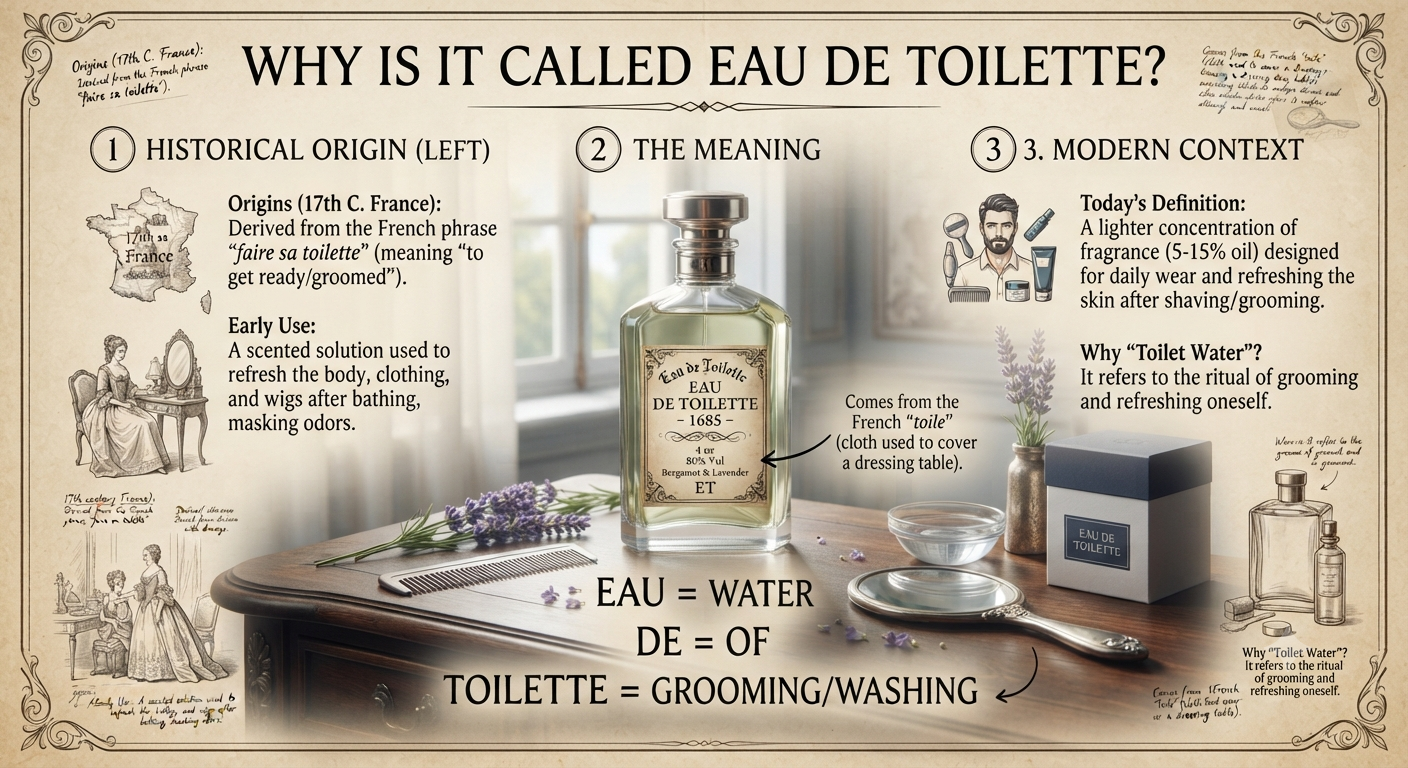
Many fragrance shoppers wonder: why is it called eau de toilette when the product has nothing to do with bathrooms or toiletries in the modern sense? The answer goes back centuries to French language, European grooming traditions, and the evolution of personal scents.
The phrase eau de toilette literally translates from French as “toilet water.” While that translation sounds strange today, the word toilette originally referred to the process of grooming, dressing, and caring for one’s appearance. An was a scented water used during a person’s daily grooming routine.
Today, eau de toilette is one of the most popular fragrance categories worldwide. It sits between lighter body sprays and stronger perfume extracts, offering a balance of freshness, elegance, and affordability. Understanding why is it called helps explain not only the name but also the history, chemistry, and purpose behind this iconic fragrance type.
What Does Eau de Toilette Mean?
The simplest explanation of why is it called is connected to the original meaning of the French word toilette.
In historical French usage:
- Eau means “water.”
- Toilette referred to grooming, dressing, and personal care.
- Eau de toilette meant a scented water used while preparing oneself.
The term did not originally describe a bathroom product. Instead, it referred to a refreshing fragrance applied during a person’s toilette, or daily beauty ritual.
Centuries ago, people used scented waters to freshen clothing, hair, skin, and linens. These preparations were considered part of personal hygiene and social presentation.
The modern association between “toilet” and bathrooms developed much later. The original French meaning was connected to elegance, grooming, and refinement.
Why Is It Called Eau de Toilette Instead of Perfume?
A common question is why manufacturers use the term eau de instead of simply calling it perfume.
The difference comes from fragrance concentration.
Perfumes contain varying amounts of aromatic oils mixed with alcohol and water. The concentration determines:
- How strong the scent smells
- How long it lasts
- How much fragrance oil is used
- The overall price
Eau de toilette traditionally contains a lower fragrance oil concentration compared with perfume or eau de parfum.
Typical concentrations include:
| Fragrance Type | Approximate Fragrance Oil Concentration | Average Longevity |
|---|---|---|
| Parfum / Extrait de Parfum | 20–40% | 8–12+ hours |
| Eau de Parfum | 15–20% | 5–8 hours |
| Eau de Toilette | 5–15% | 3–6 hours |
| Eau de Cologne | 2–5% | 2–3 hours |
Because eau de toilette contains more alcohol and less aromatic oil than stronger perfume types, it creates a lighter, fresher scent experience.
That lighter character is one reason it became popular for daytime wear.
The Historical Origins of Eau de Toilette
To fully understand why is it called, it helps to look at European fragrance history.
Perfume culture became especially important in France during the 17th and 18th centuries. Wealthy Europeans used scented waters not only for personal enjoyment but also for clothing, gloves, furniture, and social occasions.
During this period, bathing habits were different from modern standards. Fragrant waters were often used as refreshing alternatives for maintaining a pleasant scent.
A person’s toilette ritual could include:
- Washing and preparing the face
- Styling hair
- Applying cosmetics
- Dressing in formal clothing
- Adding scented water
The fragrance applied during this ritual became known as eau toilette.
The name survived even as personal hygiene practices changed. Eventually, it became a recognized fragrance classification rather than a literal description of its use.
The Difference Between Eau de Toilette and Eau de Parfum
Many people confuse eau toilette with eau de parfum because both are luxury fragrance products.
The biggest difference is the concentration of fragrance oils.
Eau de Toilette Characteristics
Eau de usually provides:
- A lighter scent profile
- More noticeable freshness
- Faster evaporation
- Better suitability for warm weather
- Easier application throughout the day
It often emphasizes bright fragrance notes such as:
- Citrus
- Herbs
- Fresh flowers
- Green notes
- Light woods
Eau de Parfum Characteristics
Eau de parfum contains more fragrance oils, making it:
- Stronger
- Longer-lasting
- More intense
- Often more expensive
It commonly highlights deeper notes such as:
- Amber
- Vanilla
- Musk
- Spices
- Resinous woods
Choosing between them depends on your lifestyle, environment, and personal preference.
Someone working in an office may prefer an elegant eau toilette because it feels clean and subtle. Someone attending an evening event may choose a richer eau de parfum.
How Long Does Eau de Toilette Last?
A major factor behind understanding why is it called is knowing how the fragrance behaves on skin.
Eau de toilette generally lasts around three to six hours, although performance depends on several factors:
- Skin type
- Weather conditions
- Application method
- Ingredient quality
- Fragrance composition
Oily skin often holds fragrance longer because natural oils slow evaporation. Dry skin may cause scents to disappear faster.
For better longevity, apply eau toilette to:
- Pulse points
- Neck
- Wrists
- Behind ears
- Inner elbows
Avoid rubbing wrists together after applying fragrance because friction can break down delicate top notes.
Why Is Eau de Toilette Popular?
Eau de remains one of the most widely purchased fragrance types because it offers a practical balance.
Consumers often choose it because:
- It feels lighter: The scent is noticeable without becoming overwhelming.
- It works for daily use: Many formulas are designed for work, school, travel, and casual occasions.
- It costs less: Lower fragrance concentration usually means a more affordable price.
- It feels refreshing: Many eau focus on clean, energetic compositions.
For many people, represents everyday luxury.
Understanding Eau de Toilette Fragrance Notes
Every fragrance develops in stages. These stages are called fragrance notes.
An usually follows a three-layer structure.
Top Notes
Top notes create the first impression after spraying.
Common examples include:
- Lemon
- Bergamot
- Orange
- Mint
- Lavender
These ingredients evaporate quickly and usually last around 15–30 minutes.
Middle Notes
Also called heart notes, these appear after the top notes fade.
Examples include:
- Rose
- Jasmine
- Cinnamon
- Cardamom
- Geranium
The heart defines the main personality of the fragrance.
Base Notes
Base notes provide depth and longevity.
Common base ingredients include:
- Sandalwood
- Cedar
- Vanilla
- Musk
- Patchouli
These notes can remain on skin for several hours.
Is Eau de Toilette Only for Men?
Another misconception is that is mainly a men’s fragrance category.
That is not true.
Eau de toilette is available for:
- Men
- Women
- Unisex fragrances
The term describes concentration and fragrance style, not gender.
A floral women’s fragrance, a woody men’s scent, and a fresh unisex fragrance can all be classified as .
Why Do Some Expensive Fragrances Use Eau de Toilette?
A higher price does not always mean a fragrance must be eau de parfum or parfum.
Many luxury fragrance houses create versions because the lighter concentration can showcase certain ingredients better.
Fresh ingredients such as:
- Citrus oils
- Green accords
- Aquatic notes
often perform beautifully in lighter formulas.
Some fragrance creators intentionally design eau de toilette compositions to feel energetic and bright rather than heavy.
How to Choose the Right Eau de Toilette
Selecting an eau de toilette depends on your needs and environment.
Consider these factors:
Climate
In hot climates, lighter fragrances often feel more comfortable.
Fresh eau de toilettes with citrus, aquatic, or green notes can feel cleaner during warm seasons.
Occasion
For everyday activities:
- Choose fresh
- Choose subtle
- Choose easy-to-wear scents
For special occasions:
- Consider richer compositions
- Look for stronger base notes
Personal Style
Your fragrance should match your personality.
Fresh scents often feel:
- Energetic
- Sporty
- Clean
Woody scents often feel:
- Sophisticated
- Calm
- Mature
Floral scents often feel:
- Elegant
- Romantic
- Soft
Common Misunderstandings About Eau de Toilette
“Does eau de toilette mean toilet fragrance?”
No. This is a modern misunderstanding caused by changes in language.
The original French term referred to grooming and personal preparation, not bathrooms.
“Is eau de toilette lower quality than perfume?”
Not necessarily.
The difference is mainly concentration and intended style. Many respected fragrance brands create exceptional eau de toilette products.
“Can women wear eau de ?”
Yes. Anyone can wear eau de toilette. The classification refers to fragrance concentration, not gender.
FAQ: Common Questions About Eau de Toilette
Why is it called eau de toilette if it is perfume?
It is called because the French word “toilette” historically referred to grooming and dressing routines. The fragrance was a scented water used during personal preparation, not something related to modern bathrooms.
Is eau de toilette better than perfume?
Neither is automatically better. offers a lighter, fresher experience, while perfume provides higher concentration and longer-lasting intensity. The best choice depends on your preference and situation.
How long does eau de toilette usually last?
Most fragrances last between three and six hours. Longevity depends on ingredients, skin chemistry, climate, and how the fragrance is applied.
Can eau de toilette be used every day?
Yes. Eau is especially popular for daily wear because it is usually lighter and less overpowering than stronger fragrance types.
What is the difference between eau toilette and eau de cologne?
Eau de toilette generally contains more fragrance oil than eau de cologne, making it stronger and longer-lasting. Eau de cologne is usually a very light, refreshing fragrance style.
Final Thoughts: Understanding the Real Meaning Behind Eau de Toilette
The answer to why is it called comes from history, not modern assumptions. The name reflects an old French grooming tradition where scented water was part of preparing oneself for the day.
Today, represents a specific fragrance style: balanced, refreshing, and versatile. It offers enough character to make an impression while remaining comfortable for everyday wear.
When choosing your next fragrance, look beyond the label. Consider the concentration, fragrance notes, season, and occasion. Understanding what truly means will help you select a scent that fits your personality and lifestyle.

Enid Arden Span is best remembered as the first wife of Jackie Jackson, the eldest brother in the world-famous Jackson 5. Yet her life is often reduced to a few recycled sentences, mixed with conflicting dates, misspelled names, unsupported net-worth estimates, and sensationalized accounts of her marriage.
The documented story is more meaningful—and more complicated.
She shared Jackie Jackson’s life during one of the most intense periods in Jackson family history. She became the mother of two children, Siggy and Brandi Jackson, experienced a deeply troubled marriage, and died in 1997 from a brain aneurysm. Unlike many people connected to celebrity families, however, she left behind very few interviews or firsthand accounts.
That limited public record makes accuracy especially important.
Enid Arden Span Quick Facts
| Detail | Verified or widely documented information |
|---|---|
| Full name | Enid Arden Span, also published as Enid Arden Spann |
| Known for | First wife of Jackson 5 singer Jackie Jackson |
| Husband | Sigmund Esco “Jackie” Jackson |
| Marriage | November 1974 |
| Children | Sigmund “Siggy” Jackson Jr. and Brandi Jackson |
| Final divorce filing | January 1986 |
| Reported divorce completion | 1987 |
| Death | 1997 |
| Reported cause of death | Brain aneurysm |
| Profession | Not reliably documented |
| Verified net worth | Not publicly available |
Several online biographies list June 27, 1954, as her birth date and December 20, 1997, as the exact date of her death. Those details are widely repeated, but the more authoritative public sources available primarily confirm that she was 31 in January 1986, died in 1997, and suffered a brain aneurysm.
Who Was Enid Arden Span?
Enid Arden Span was a private individual who became publicly known through her marriage to Jackie Jackson. Born Sigmund Esco Jackson, Jackie was a founding member of the Jackson 5 and the oldest male member of the performing Jackson siblings.
Unlike Jackie, Enid did not build a documented career in music, television, acting, or another public-facing profession. Most reliable information about her comes from marriage records, contemporary news reports, family profiles, archival entertainment coverage, and later reporting about her children.
This distinction matters. Many celebrity websites attempt to fill biographical gaps with assumptions about education, occupation, childhood, wealth, personality, or family background. There is little trustworthy evidence supporting most of those claims.
A responsible biography should therefore separate three categories clearly:
- Documented facts, such as her marriage and children
- Contemporary allegations, particularly those recorded during the divorce
- Unknown personal details that cannot be responsibly reconstructed
That approach may seem less dramatic, but it provides far more value than presenting speculation as fact.
The Name Confusion: Span or Spann?
Readers searching for Enid Arden Span will quickly notice two versions of her surname: Span and Spann.
Both appear across published sources. Contemporary and later entertainment coverage frequently uses “Enid Arden Spann,” while image archives, social posts, genealogy listings, and search queries often use “Enid Arden Span.”
The variation may result from inconsistent indexing, transcription, publication practices, or family-record spellings. It does not appear to refer to two different women.
For SEO and research purposes, the relevant name variants include:
- Enid Arden Span
- Enid Arden Spann
- Enid Span Jackson
- Enid Jackson
- Jackie Jackson’s first wife
- Siggy Jackson’s mother
- Brandi Jackson’s mother
Using the variations naturally helps readers find the correct person without falsely suggesting that every spelling has been independently confirmed through a primary record.
How Enid Arden Span Met Jackie Jackson
Published profiles state that Enid Arden Span and Jackie Jackson were together for approximately five years before marrying. Their relationship would therefore have begun around 1969, when the Jackson 5 were rapidly moving from regional recognition to international fame.
The precise circumstances of their first meeting are not well documented. There is no widely available, authoritative interview in which either Enid or Jackie provides a detailed account of where they met, who introduced them, or how the relationship developed.
What is known is that their courtship overlapped with a transformative period in Jackie’s career.
The Jackson 5 signed with Motown and achieved major commercial success with songs such as “I Want You Back,” “ABC,” “The Love You Save,” and “I’ll Be There.” Jackie was consequently navigating touring, recording, television appearances, fan attention, and intense family management while still a young man.
That context likely shaped the relationship, although it would be irresponsible to claim exactly how without direct testimony from the couple.
Enid Arden Span and Jackie Jackson’s Marriage
Enid Arden Span married Jackie Jackson in November 1974 following their reported five-year relationship. Jackie was 23 years old at the time.
Their marriage began while the Jackson family’s professional structure was changing. By the mid-1970s, the group was preparing to leave Motown, move to Epic Records, and perform under the shortened name the Jacksons because Motown retained control of the Jackson 5 name.
This meant Enid entered married life within an unusually demanding environment. Jackie’s career involved international travel, rehearsals, business negotiations, recording sessions, publicity obligations, and constant public scrutiny.
Still, Enid was not merely a background character in a music-industry story. She was building a household and later raising two children while living beside a performer whose family was becoming one of the most closely watched entertainment dynasties in the world.
Their Son, Sigmund “Siggy” Jackson Jr.
Enid and Jackie’s first child, Sigmund Esco “Siggy” Jackson Jr., was born on June 29, 1977. Later in life, he entered entertainment as a hip-hop performer using the stage name Dealz.
Siggy also became involved in media production and business. Alongside his wife, Toyia, he established the production company Undeniable Visions, which has worked on documentary and visual-media projects.
His appearance on the third season of Claim to Fame in 2024 brought him renewed public attention. Competing under the name “Dedrick,” he attempted to conceal his relationship to the Jackson family, although his identity became a major part of the season’s storyline.
For researchers trying to understand Enid Arden Span, Siggy is especially important because he represents one of the clearest continuations of her family legacy. His work connects music, production, entrepreneurship, and the next generation of Jackson descendants.
Their Daughter, Brandi Jackson
The couple’s second child, Brandi Jackson, was born on February 6, 1982. She has mainly worked behind the camera as a photographer and videographer rather than pursuing the same type of recording career as many of her relatives.
Brandi has also appeared in Jackson family-related productions, including The Jacksons: A Family Dynasty. Jackie has publicly praised her as intelligent, caring, philanthropic, and a positive role model for her younger brothers.
She attracted broader media attention in 2019 when she publicly discussed allegations made against her late uncle Michael Jackson. Her statements became part of a wider, highly contested media conversation, although that controversy is separate from her mother’s biography.
What matters here is that Brandi developed a recognizable creative identity of her own. She did not simply remain known as Jackie Jackson’s daughter or Michael Jackson’s niece.
Through Siggy and Brandi, Enid Arden Span remains connected to both the private and public history of the Jackson family.
Marriage Problems and the First Separation
The marriage had become seriously troubled by the mid-1980s.
According to later biographical accounts, Jackie filed for divorce in August 1984. The couple remained separated until April 1985, when they reconciled. A contemporary United Press International report confirms this separation-and-reconciliation timeline.
The reunion did not resolve the relationship’s underlying problems.
In January 1986, Enid filed her own petition seeking dissolution of the marriage. The filing produced substantial press coverage because of Jackie Jackson’s fame and because the petition contained allegations of physical violence.
These claims should be described carefully. They were allegations contained in a legal filing and reported by contemporary news organizations—not independent findings that a biographer should embellish.
Enid Arden Span’s 1986 Divorce Filing
On January 8, 1986, Enid Arden Span, identified in contemporary reports as Enid Jackson, filed for divorce and obtained a temporary restraining order.
The Los Angeles Times reported that a Los Angeles Superior Court commissioner ordered Jackie to remain at least 100 yards away from the couple’s Encino home and prohibited him from contacting Enid before a scheduled hearing. The newspaper stated that Enid alleged Jackie had struck and severely bruised her during a November 1985 incident.
At the time of the filing:
- The marriage was described as approximately 11 years old
- Enid was reported to be 31
- Jackie was reported to be 34
- Their son Sigmund was eight
- Their daughter, whose name appeared as “Brandy” in the report, was three
- Enid sought custody and financial support
- The couple’s assets were described as including an Encino estate and recording studio
The financial requests reported in the petition reflected the lifestyle and expenses claimed within a high-profile entertainment household. They should not be treated as proof of Enid’s individual wealth or personal net worth.
The divorce is commonly reported as having been completed in 1987.
Was Enid Arden Span Involved in the Music Industry?
There is no reliable evidence that Enid Arden Span worked as a singer, songwriter, producer, manager, actress, or recording executive.
Her proximity to the Jackson family naturally placed her around the entertainment business. She may have attended events, appeared in family photographs, and participated in the social life surrounding the group, but proximity is not the same as a documented profession.
Some websites assign her vague labels such as “celebrity spouse,” “media personality,” or “homemaker.” The first describes the reason for public interest rather than an occupation. The remaining labels should not be presented as verified unless supported by records or firsthand reporting.
The most accurate statement is simple: her independent professional life is not publicly documented.
Did Enid Arden Span Have a Verified Net Worth?
No authoritative source has established the net worth of Enid Arden Span.
Figures found on entertainment blogs are usually unsupported estimates. They often confuse Jackie Jackson’s career earnings, marital property referenced during divorce proceedings, family assets, and an individual’s personal wealth.
The 1986 Los Angeles Times report mentioned valuable shared holdings and royalty interests claimed in court documents. However, those figures described disputed marital assets and financial requests during an active divorce case. They do not establish how much Enid personally owned before, during, or after the divorce.
A trustworthy article should therefore avoid attaching an invented dollar amount to her name.
Life After the Divorce
Very little verified information is available about Enid Arden Span after the marriage ended.
She appears to have largely withdrawn from major public coverage. There is no substantial archive of interviews, memoirs, public appearances, business announcements, or entertainment projects associated with her later years.
This absence should not be interpreted negatively. It may simply indicate that she preferred a private life after a difficult and heavily publicized marriage.
Many biographies make the mistake of treating a lack of coverage as a gap that must be filled. In reality, privacy is itself an important part of Enid’s story. She lived near extraordinary fame without attempting to build a continuing public brand around it.
How Did Enid Arden Span Die?
Enid Arden Span died in 1997 from a brain aneurysm, according to later family reporting and references to a January 1998 Jet death notice. People’s profile of Jackie Jackson’s children also identifies a brain aneurysm as the cause of her death.
Many online sources list December 20, 1997, as the exact date and 43 as her age. Those details are plausible and widely circulated, but publicly accessible authoritative coverage is stronger on the year and cause than on every biographical date.
A brain aneurysm occurs when a weakened area in a blood vessel in the brain bulges or balloons. If it ruptures, it can cause bleeding in or around the brain and may become rapidly life-threatening.
There is no credible evidence that her death involved suspicious circumstances. Sensationalized claims should be rejected unless supported by reliable medical, legal, or family documentation.
What Makes Her Story Historically Relevant?
The significance of Enid Arden Span extends beyond the label “Jackie Jackson’s first wife.”
Her marriage intersected with:
- The Jackson 5’s transition from childhood fame to adult careers
- The group’s departure from Motown
- The rise of the Jacksons as a touring and recording act
- The financial scale of the 1984 Victory Tour era
- The private pressures surrounding one of America’s most famous families
- The childhoods of Siggy and Brandi Jackson
Her experience also illustrates how women connected to famous male entertainers are often documented unevenly. Their identities become visible during weddings, births, lawsuits, divorces, and deaths—but their own voices remain largely absent.
That imbalance creates a serious research challenge. Writers must resist the temptation to turn silence into fiction.
Common Myths and Unsupported Claims
Because the verified record is limited, search results contain numerous claims that should be treated cautiously.
Her parents and childhood are fully known
Some blogs name supposed parents, describe her as adopted, or assign her a detailed family history. These claims are rarely linked to accessible primary documents.
She had a known entertainment career
No dependable evidence establishes a professional acting, music, modeling, or production career.
Her net worth can be calculated
Divorce filings mentioning household assets do not provide a reliable measure of her personal estate.
Every date online is equally verified
Her marriage, children, 1986 filing, 1997 death, and reported cause of death are much better documented than many claims about her birth, education, childhood, or post-divorce activities.
Her marriage can be explained through one rumor
Celebrity relationships are rarely reducible to a single affair, argument, or tabloid narrative. The public record confirms serious marital conflict and legal allegations, but it cannot fully explain the private history of the relationship.
Enid Arden Span’s Legacy
The strongest legacy of Enid Arden Span is not a celebrity title. It is her family.
Siggy Jackson has pursued music, production, documentary work, and business. Brandi Jackson has built a career around photography and videography while participating in selected Jackson family projects.
Their lives ensure that Enid remains part of the broader Jackson story, even though she did not leave behind albums, books, televised interviews, or an extensively documented public career.
Her biography also offers a lesson for modern readers. Fame can preserve names while erasing context. Search engines may produce thousands of pages, but repetition does not turn an unsupported claim into evidence.
The best account of Enid is therefore one that respects both what is known and what remains private.
Frequently Asked Questions
Who was Enid Arden Span?
Enid Arden Span was the first wife of Jackson 5 singer Jackie Jackson. They married in November 1974 after reportedly being together for about five years. She was the mother of his two oldest children, Sigmund “Siggy” Jackson Jr. and Brandi Jackson.
How many children did Enid Span and Jackie Jackson have?
They had two children. Siggy Jackson was born on June 29, 1977, and later worked as a hip-hop artist and producer. Brandi Jackson was born on February 6, 1982, and became a photographer and videographer.
Why did Enid Arden Span divorce Jackie Jackson?
The couple experienced a separation, reconciliation, and renewed divorce proceedings during the mid-1980s. In January 1986, Enid filed for divorce, alleged physical violence, and obtained a temporary restraining order. The allegations were reported at the time by the Los Angeles Times and UPI.
When and how did Enid Arden Span die?
She died in 1997 from a brain aneurysm. December 20, 1997, is frequently listed as the precise date, although the most accessible authoritative sources more clearly confirm the year and reported medical cause.
What was Enid Arden Span’s net worth?
Her personal net worth has never been reliably established. Although the 1986 divorce filing referenced valuable marital property and Jackie Jackson’s music-related income, those disputed assets cannot be converted into a verified estimate of Enid’s individual wealth.
Conclusion
The public story of Enid Arden Span is brief but significant. She was Jackie Jackson’s first wife, the mother of Siggy and Brandi Jackson, and a woman whose private life unfolded beside one of the most famous musical families in modern history.
Her biography also demands restraint. Reliable records support the core timeline of her marriage, children, divorce proceedings, and death, but they do not justify elaborate claims about her profession, childhood, personality, or fortune.
Readers researching her should prioritize contemporary reporting, established family profiles, archival publications, and clearly sourced records. Ignore websites that present speculation as biography. In Enid’s case, accuracy is not merely an SEO advantage—it is the most respectful way to preserve her story.


10 Cloud Engineering Certification from GIPMC to Advance Your Career

Password makesilver2121: What It Means, Whether It Is Safe, and How to Protect Your Accounts

Naiomy Vegan Leather Metal Platform Bed YouTube: Specs, Assembly, Reviews and Video Guide
-

 Fashion9 years ago
These ’90s fashion trends are making a comeback in 2017
-
Entertainment9 years ago
The final 6 ‘Game of Thrones’ episodes might feel like a full season
-
Fashion9 years ago
According to Dior Couture, this taboo fashion accessory is back
-
Entertainment9 years ago
The old and New Edition cast comes together to perform
-

 Lifestyle5 months ago
A Complete Guide to Screen Printed Tee Shirts for Branding and Style
-
Sports9 years ago
Phillies’ Aaron Altherr makes mind-boggling barehanded play
-
Business9 years ago
Uber and Lyft are finally available in all of New York State
-
Entertainment9 years ago
Disney’s live-action Aladdin finally finds its stars