
Business
6 Stunning new co-working spaces around the globe
Quis autem vel eum iure reprehenderit qui in ea voluptate velit esse quam nihil molestiae consequatur, vel illum qui.


At vero eos et accusamus et iusto odio dignissimos ducimus qui blanditiis praesentium voluptatum deleniti atque corrupti quos dolores et quas molestias excepturi sint occaecati cupiditate non provident, similique sunt in culpa qui officia deserunt mollitia animi, id est laborum et dolorum fuga.
Quis autem vel eum iure reprehenderit qui in ea voluptate velit esse quam nihil molestiae consequatur, vel illum qui dolorem eum fugiat quo voluptas nulla pariatur.
Temporibus autem quibusdam et aut officiis debitis aut rerum necessitatibus saepe eveniet ut et voluptates repudiandae sint et molestiae non recusandae. Itaque earum rerum hic tenetur a sapiente delectus, ut aut reiciendis voluptatibus maiores alias consequatur aut perferendis doloribus asperiores repellat.
Lorem ipsum dolor sit amet, consectetur adipisicing elit, sed do eiusmod tempor incididunt ut labore et dolore magna aliqua. Ut enim ad minim veniam, quis nostrud exercitation ullamco laboris nisi ut aliquip ex ea commodo consequat.
“Duis aute irure dolor in reprehenderit in voluptate velit esse cillum dolore eu fugiat”
Nemo enim ipsam voluptatem quia voluptas sit aspernatur aut odit aut fugit, sed quia consequuntur magni dolores eos qui ratione voluptatem sequi nesciunt.
Et harum quidem rerum facilis est et expedita distinctio. Nam libero tempore, cum soluta nobis est eligendi optio cumque nihil impedit quo minus id quod maxime placeat facere possimus, omnis voluptas assumenda est, omnis dolor repellendus.
Nulla pariatur. Excepteur sint occaecat cupidatat non proident, sunt in culpa qui officia deserunt mollit anim id est laborum.
Sed ut perspiciatis unde omnis iste natus error sit voluptatem accusantium doloremque laudantium, totam rem aperiam, eaque ipsa quae ab illo inventore veritatis et quasi architecto beatae vitae dicta sunt explicabo.
Neque porro quisquam est, qui dolorem ipsum quia dolor sit amet, consectetur, adipisci velit, sed quia non numquam eius modi tempora incidunt ut labore et dolore magnam aliquam quaerat voluptatem. Ut enim ad minima veniam, quis nostrum exercitationem ullam corporis suscipit laboriosam, nisi ut aliquid ex ea commodi consequatur.
Business
Password makesilver2121: What It Means, Whether It Is Safe, and How to Protect Your Accounts
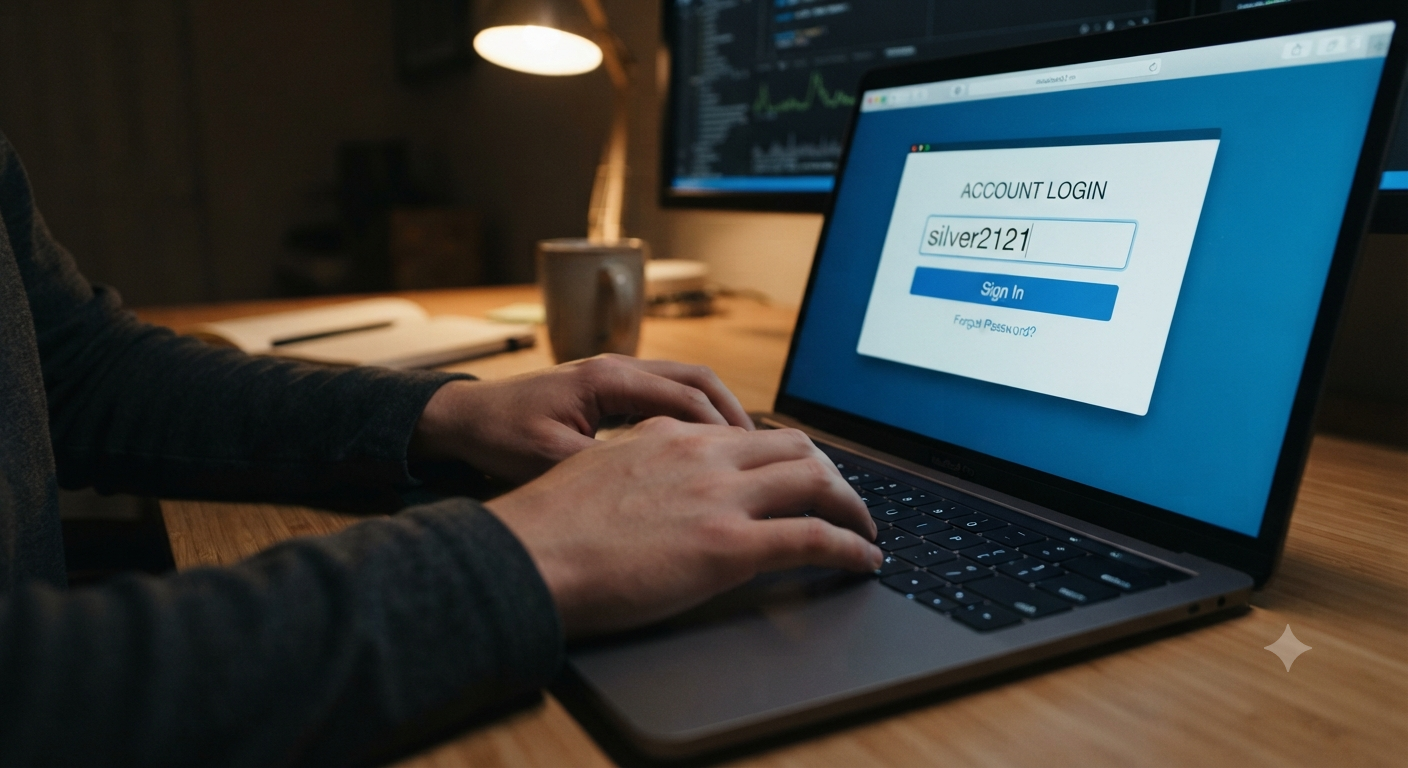
If you searched for Password makesilver2121, the first thing to know is that the phrase does not appear to identify a recognized security standard, software feature, or official password system. Current search results mainly use it as a keyword around general password-security advice, which means readers should be careful not to assume it is a legitimate default password, recovery code, or credential for any specific service.
That distinction matters. A phrase that looks like a password can easily be copied, reused, indexed by search engines, and added to attacker wordlists. If this phrase is an actual password you use anywhere, treat its public visibility as a reason to replace it immediately rather than as proof that it is “strong.”
Quick answer: This string should be treated as an example of a human-created password pattern, not as a secret worth reusing. Its length is better than a very short password, but its recognizable words, the literal term “password,” and repeated numeric pattern make it far more predictable than a randomly generated unique credential.
What Is Password makesilver2121?
The phrase Password makesilver2121 appears to be a constructed password-like string composed of familiar language and digits. Search results published around the phrase frame it as a cybersecurity topic, but there is no reliable evidence in those results that it belongs to a particular device, account, application, or service.
That is an important SEO and user-intent point. Someone searching the term may be trying to understand whether it is a real password, whether it is safe to use, why it appears online, or what modern password rules actually recommend.
Why the phrase attracts attention
This password-like string looks stronger than a basic password such as a short dictionary word because it is relatively long. But human-readable length alone does not guarantee security.
Attackers do not guess passwords only by trying every possible character combination. Real password-cracking and credential attacks make heavy use of dictionaries, leaked credentials, predictable substitutions, repeated number patterns, and context-specific words. NIST therefore recommends screening new passwords against blocklists of common, expected, and previously compromised values instead of relying on traditional complexity rules alone.
Is Password makesilver2121 a Strong Password?
A useful password review should examine length, predictability, uniqueness, exposure, and account protection together. On that basis, this candidate has one positive trait—length—but several serious weaknesses.
The string includes the exact word “password,” recognizable English word fragments, and the repeated number sequence “2121.” Those patterns are easier for targeted guessing tools to prioritize than a randomly generated credential of similar length.
NIST’s current Digital Identity Guidelines say that a password used as a single authentication factor should be at least 15 characters, while passwords used as part of multi-factor authentication may be allowed at a minimum of eight characters. NIST also recommends allowing at least 64 characters and explicitly says that services should not impose mandatory mixtures of uppercase letters, lowercase letters, numbers, and symbols.
So the right question is not simply, “Does it have enough characters?” The better question is, “Would an attacker be likely to guess or find this exact value in a list before exhausting more random possibilities?”
Why length is necessary but not sufficient
Longer passwords generally increase the search space, especially when they are genuinely unpredictable. However, a 20-character password assembled from obvious words and patterns can be much weaker than a 20-character credential generated randomly by a reputable password manager.
OWASP similarly recommends long passwords, support for at least 64 characters, and checks against common or breached passwords. It also warns against silently truncating user passwords and recommends allowing a broad range of characters rather than forcing outdated composition formulas.
Password makesilver2121 and Modern NIST Guidance
One reason this topic deserves a fresh article is that some pages ranking for this keyword repeat advice that no longer matches modern best practice. For example, one current search result recommends changing passwords every three to six months.
NIST’s 2025 SP 800-63B guidance says the opposite: verifiers should not require periodic password changes unless there is evidence that the authenticator has been compromised. It also requires services to compare proposed passwords against blocklists of commonly used, expected, or compromised values.
That difference is not minor. Forced rotation can encourage predictable variations such as adding a new number or changing one symbol, while unique, high-quality passwords stored in a password manager can remain secure until there is evidence of compromise.
What current password rules emphasize
For someone evaluating this kind of password, the most useful modern checklist is:
- Use a unique password for every account.
- Prefer long, randomly generated passwords or long passphrases built from unrelated words.
- Avoid names, birthdays, account names, service names, common phrases, and obvious sequences.
- Use a password manager rather than memorizing dozens of credentials.
- Turn on multi-factor authentication (MFA) wherever it is offered.
- Change a password promptly if it has been exposed, reused after a breach, phished, or otherwise compromised.
- Use a passkey when a trusted service supports one and account recovery is properly configured.
NIST explicitly says password verifiers should allow password managers, autofill, and paste functionality. It notes that password managers can increase the likelihood that users choose stronger credentials and can help maintain distinct passwords across services.
Why Reusing Password makesilver2121 Is Risky
Even a technically strong password becomes dangerous when it is reused. If the same password were used on multiple sites and one site leaked it, attackers could try the same email-and-password combination elsewhere.
That technique is called credential stuffing. OWASP describes it as the automated use of stolen username/password pairs against other login pages, taking advantage of people who reuse credentials across services.
This is why uniqueness matters as much as complexity. A password manager can create a different random credential for each account, meaning a breach at one provider does not automatically expose your email, shopping, social media, cloud storage, or financial accounts.
Search visibility changes the risk
There is another practical reason not to reuse this public string: the phrase already exists on public webpages. Anything publicly indexed should be considered unsuitable as a private secret.
You should never rely on obscurity after a password has been published, posted in a forum, included in an article, shared in a screenshot, pasted into a public chat, or committed to a public code repository. Once a secret is public, the safe response is replacement.
What to Do If Password makesilver2121 Is Your Real Password
If this phrase is actually attached to one of your accounts, do not test it on random websites or post it anywhere else. Instead, update the affected account through the service’s official settings or password-recovery flow.
Use this order of operations:
- Change the password on the affected account. Generate a new, unique credential with a reputable password manager.
- Change it anywhere else you reused it. Reuse creates the biggest cross-account risk.
- Enable MFA. An authenticator app, hardware security key, or another strong second factor can make stolen-password attacks harder.
- Review active sessions and devices. Sign out unknown sessions and remove devices you do not recognize.
- Check recovery information. Confirm that your recovery email, phone number, and backup methods still belong to you.
- Look for suspicious account activity. Review recent logins, security alerts, sent messages, purchases, forwarding rules, or profile changes.
- Move to passkeys where practical. Passkeys can eliminate the reusable shared secret that traditional password phishing depends on.
CISA recommends using strong passwords, a password manager, and MFA as core account-protection measures.
How to Create Something Better Than Password makesilver2121
The safest replacement for this public password-like phrase is not another clever phrase that you invent and reuse everywhere. It is a different, unique credential for every account.
For accounts that support password managers, use the manager’s built-in password generator and accept a long random value. You do not need to memorize it.
For a password you genuinely must remember, use a long passphrase made from unrelated, randomly selected words, not a quote, lyric, slogan, pet name, family detail, or favorite team. Do not copy a passphrase example from an article; once an example is published, it is no longer an ideal secret.
Do symbols automatically make Password makesilver2121 safer?
Not necessarily. Adding one predictable exclamation mark or changing an “a” to “@” may satisfy an old website rule without making the password meaningfully unpredictable.
Modern NIST guidance intentionally avoids mandatory composition rules because predictable human behavior can undermine them. The stronger strategy is length + uniqueness + unpredictability + breached-password screening + MFA.
Password Managers: The Practical Solution
A password manager solves the central problem behind weak credentials: humans are bad at remembering dozens of unrelated secrets. Instead of reusing the same memorable phrase or creating small variations of it, you can store a different randomly generated password for every service.
NIST recommends that verifiers support password managers, autofill, and paste. OWASP also recommends enabling password-manager use and checking new passwords against breached-password datasets.
Protect the password-manager account itself carefully. Use a strong master password, enable MFA or a passkey if available, keep recovery information current, and secure the devices that can unlock the vault.
MFA and Passkeys Go Beyond Password makesilver2121
No password, including Password makesilver2121, is phishing-resistant simply because it is long. NIST explicitly states that passwords are not phishing-resistant.
MFA improves account security by requiring another factor beyond the password. That means a stolen password alone may not be enough to access the account.
Passkeys go further. The FIDO Alliance describes passkeys as a password-replacement technology based on cryptographic key pairs. They are designed to resist phishing and avoid storing a reusable shared password secret on the service.
For high-value accounts—primary email, cloud storage, financial services, work systems, and administrator accounts—using a phishing-resistant sign-in method where available can provide a major improvement over relying only on memorized passwords.
What Website Owners Should Learn From Password makesilver2121
The Password makesilver2121 topic is also useful for developers and site owners because user security depends on the authentication system, not just user behavior.
A modern login system should:
- Permit long passwords and passphrases.
- Avoid arbitrary composition requirements.
- Compare proposed passwords against common and compromised-password blocklists.
- Allow password-manager autofill and paste.
- Rate-limit repeated authentication failures.
- Offer MFA and, ideally, phishing-resistant authentication such as passkeys.
- Avoid forcing routine password changes without evidence of compromise.
- Store passwords using secure password-hashing methods rather than plaintext.
OWASP’s password-storage guidance says passwords should never be stored in plaintext and recommends slow password-hashing algorithms such as Argon2id, bcrypt, or PBKDF2, with unique salts.
This matters because even excellent user passwords can be exposed by poor server-side storage. Authentication security is a shared responsibility between the person choosing the credential and the service protecting it.
Common Myths About Password makesilver2121
“It is long, so it must be secure.”
Length helps, but predictability and reuse can erase much of that advantage. A long public phrase is still a poor secret.
“Adding 2121 makes it random.”
Repeated digits and year-like number patterns are common human choices. Attackers can prioritize such patterns rather than treating every character as equally unpredictable.
“I should change it every 90 days no matter what.”
Current NIST guidance does not recommend arbitrary periodic password changes. Change passwords when they are compromised, reused after a breach, or otherwise at risk.
“A complex password means I do not need MFA.”
Passwords can still be stolen through phishing, malware, or a compromised service. NIST notes that passwords themselves are not phishing-resistant, while FIDO passkeys are designed to provide phishing-resistant authentication.
FAQ About Password makesilver2121
1. What does Password makesilver2121 mean?
There is no verified evidence that Password makesilver2121 is an official term, universal default password, software command, or recognized authentication standard. Search results mainly associate the phrase with general password-security content.
If you saw it connected to a particular website, device, game, router, or account, verify the context through that product’s official documentation rather than assuming a public webpage is providing a legitimate credential.
2. Is Password makesilver2121 safe to use?
No publicly indexed password-like string should be considered a good secret. Password makesilver2121 contains recognizable words and a repeated number pattern, and its appearance on public webpages makes reuse especially unwise.
A better approach is a unique password generated by a reputable password manager, protected with MFA, or a passkey where supported.
3. How long should a strong password be?
Under current NIST SP 800-63B guidance, services should require at least 15 characters when a password is the only authentication factor. A password used as part of MFA may have an eight-character minimum, and services should support maximum lengths of at least 64 characters.
Length should be combined with uniqueness and unpredictability. Do not pad a familiar password with obvious digits just to reach a character target.
4. Should I regularly change Password makesilver2121?
If Password makesilver2121 is a real password and it has been publicly exposed, reused, phished, or included in a breach, change it now. But for passwords that have not been compromised, NIST says services should not force periodic changes simply because a fixed number of days has passed.
The higher-value habit is using a unique credential for every account and responding quickly to actual compromise signals.
5. Is a passkey better than Password makesilver2121?
For services that implement passkeys correctly, passkeys can provide stronger protection against phishing than a traditional password. FIDO explains that passkeys use cryptographic key pairs rather than reusable shared secrets and are designed to be phishing-resistant.
You should still protect the device and account that stores your passkeys, keep recovery options secure, and understand how your passkey provider synchronizes or backs up credentials.
Conclusion: Treat Password makesilver2121 as Public, Not Secret
The safest way to understand Password makesilver2121 is as a public search phrase that illustrates a broader cybersecurity lesson. A password can look long and complicated while still being predictable, reused, exposed, or vulnerable to phishing.
Do not copy it into a real account. Use a password manager to generate unique credentials, enable MFA, adopt passkeys where available, and change passwords when there is evidence of compromise rather than following outdated forced-rotation habits. Those practices align far more closely with current NIST, OWASP, CISA, and FIDO guidance than trying to invent one “perfect” password and reuse it everywhere.
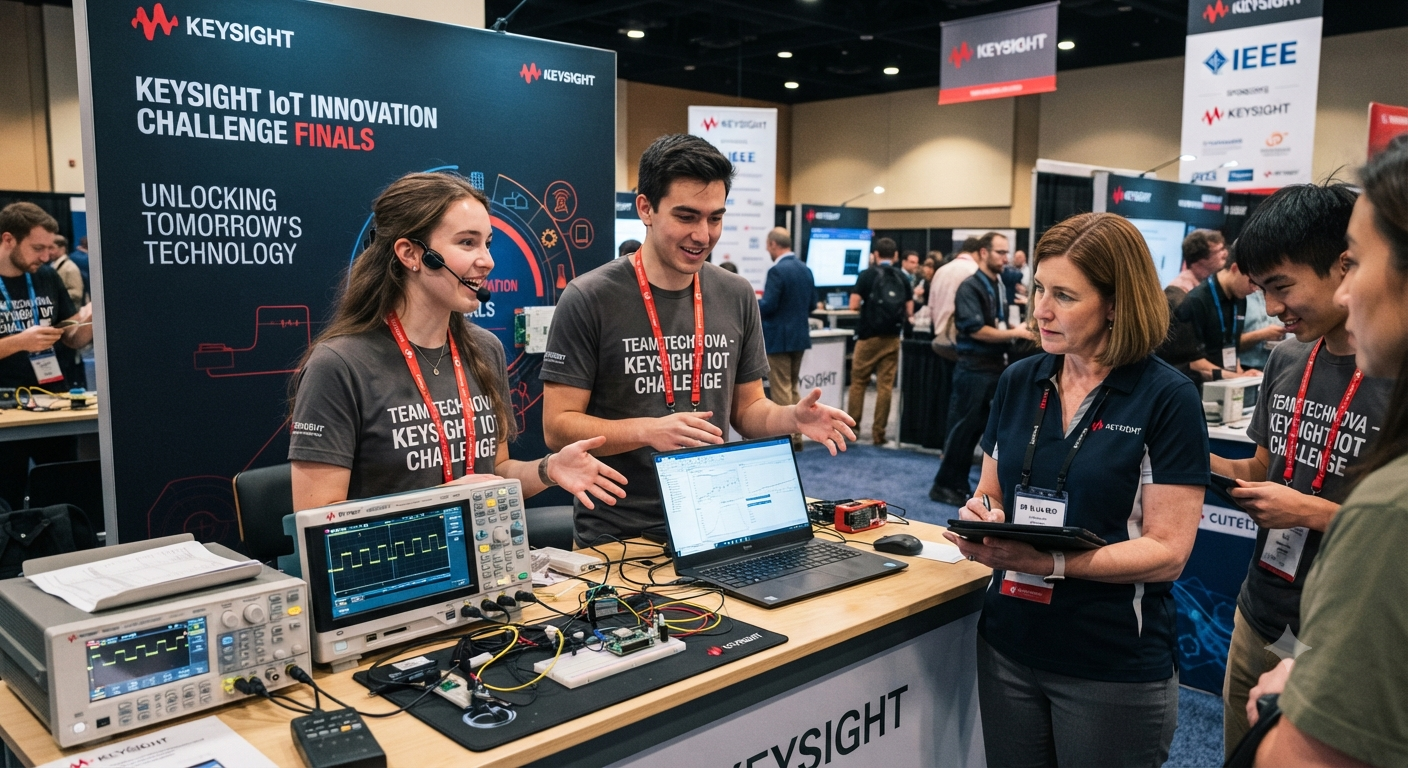
Keysight competition has become increasingly intense as demand for advanced electronic test, measurement, networking, semiconductor, aerospace, and telecommunications solutions continues to grow worldwide. While Keysight Technologies remains one of the industry’s most respected innovators, it competes against several global companies that continuously push the boundaries of precision testing, RF engineering, automation, and software-defined measurement systems.
Understanding the Keysight competition isn’t simply about identifying competing brands. Buyers, engineers, researchers, procurement teams, and investors also need to understand where each company excels, how their product portfolios differ, what industries they dominate, and which vendor offers the best value for specific applications.
This comprehensive guide explores the competitive landscape in detail while examining industry trends, technology leadership, pricing strategies, innovation, and future market opportunities.
What Is Keysight Technologies?
Keysight Technologies is a global leader specializing in:
- Electronic test and measurement equipment
- RF and microwave testing
- Oscilloscopes
- Signal analyzers
- Network analyzers
- Semiconductor validation
- Automotive testing
- Aerospace and defense measurement
- 5G and 6G testing
- Software-driven design validation
- Network security testing
The company originated from Agilent Technologies in 2014 and has since expanded through strategic acquisitions and continuous innovation.
Its customers include:
- Semiconductor manufacturers
- Universities
- Government laboratories
- Aerospace companies
- Automotive manufacturers
- Wireless infrastructure providers
- Consumer electronics companies
Why the Keysight Competition Matters
Electronic testing equipment often represents a multi-million-dollar investment.
Choosing between vendors affects:
- Measurement accuracy
- Long-term calibration costs
- Software compatibility
- Automation workflows
- Production efficiency
- Product validation speed
- Research capabilities
That is why understanding Keysight competition helps organizations make smarter purchasing decisions instead of relying solely on brand recognition.
The Biggest Keysight Competitors
Several companies compete directly with Keysight across multiple product categories.
1. Tektronix
Tektronix remains one of Keysight’s oldest and strongest competitors.
Its core strengths include:
- Digital oscilloscopes
- Signal generators
- Logic analyzers
- Education markets
- Embedded systems testing
Advantages
- Strong oscilloscope portfolio
- Excellent educational presence
- Reliable customer support
- Competitive mid-range pricing
Weaknesses
- Smaller software ecosystem
- Less dominance in RF simulation
Tektronix is particularly popular among universities and embedded electronics engineers.
2. Rohde & Schwarz
Rohde & Schwarz is arguably the closest rival in premium RF measurement.
Its expertise includes:
- Wireless communications
- Military communications
- Radar testing
- EMC compliance
- Broadcasting systems
Strengths
- Exceptional RF engineering
- Premium signal generators
- Industry-leading spectrum analyzers
- Strong defense relationships
Many telecom companies compare Rohde & Schwarz directly against Keysight before making purchasing decisions.
3. National Instruments (NI)
Following its acquisition, NI continues to be a major player in automated testing.
Core markets include:
- Automated test systems
- Industrial automation
- PXI platforms
- LabVIEW software
- Manufacturing validation
NI excels where flexible modular testing is required.
Instead of focusing only on standalone instruments, it provides customizable platforms for automated production environments.
4. Anritsu
Anritsu specializes heavily in communications testing.
Popular application areas include:
- Mobile networks
- Fiber optics
- RF
- 5G
- Network performance
The company competes aggressively in wireless infrastructure projects.
5. Viavi Solutions
Viavi primarily focuses on:
- Optical networking
- Network assurance
- Telecom infrastructure
- Fiber testing
- Service validation
Although its product lineup differs slightly, Viavi competes directly in telecommunications testing markets.
6. Advantest
Advantest dominates semiconductor production testing.
Key specialties include:
- Wafer testing
- Chip validation
- Memory testing
- AI processor testing
For semiconductor manufacturers, Advantest often represents one of the strongest alternatives.
7. Yokogawa Test & Measurement
Yokogawa is respected for:
- Power analyzers
- Industrial measurement
- Precision instrumentation
- Process control
Its products are common in industrial automation and energy applications.
Comparing Keysight Against Major Competitors
| Company | Strongest Area | Best For |
|---|---|---|
| Keysight | RF, semiconductor, software | High-end engineering |
| Tektronix | Oscilloscopes | Education and embedded design |
| Rohde & Schwarz | RF systems | Defense and telecom |
| NI | Automated testing | Manufacturing |
| Anritsu | Wireless | Mobile communications |
| Advantest | Semiconductor testing | Chip manufacturing |
| Yokogawa | Industrial measurement | Energy and automation |
| Viavi | Optical networks | Telecom operators |
Where Keysight Holds a Competitive Advantage
Despite strong Keysight competition, the company maintains several advantages.
Integrated Software Ecosystem
Keysight combines hardware with powerful software solutions.
Examples include:
- PathWave
- ADS (Advanced Design System)
- EM simulation
- Network emulation
- Cloud analytics
This integration reduces engineering time significantly.
Leadership in RF and Microwave Testing
Keysight has consistently invested in:
- Millimeter wave
- Satellite communications
- RF validation
- High-frequency analysis
Its equipment is frequently used during early technology development.
Semiconductor Leadership
Chip manufacturers increasingly require:
- Higher frequencies
- Faster validation
- AI accelerator testing
- Advanced packaging verification
Keysight provides comprehensive solutions covering the complete design lifecycle.
Strong Research Presence
Many universities, government agencies, and research institutions standardize on Keysight equipment because of:
- Accuracy
- Long-term reliability
- Calibration consistency
- Extensive documentation
Where Competitors May Have an Edge
No company dominates every market.
Some competitors outperform Keysight in specific situations.
Tektronix
Better for:
- Educational budgets
- Entry-level oscilloscopes
- General electronics labs
National Instruments
Preferred for:
- Automated manufacturing
- Modular PXI systems
- Flexible software-driven testing
Rohde & Schwarz
Often chosen for:
- Military projects
- Government contracts
- Advanced RF research
Advantest
Leads in:
- Semiconductor production testing
- Memory validation
- High-volume manufacturing
Industry Trends Affecting the Keysight Competition
Several technologies continue reshaping the competitive landscape.
Artificial Intelligence
AI chips require:
- Faster validation
- Larger datasets
- More complex testing
Every competitor is investing heavily in AI-enabled measurement.
6G Development
Although 5G deployment continues globally, research organizations have already begun developing 6G.
Testing requirements include:
- Terahertz frequencies
- Ultra-low latency
- Massive MIMO
- AI-native networking
This creates significant opportunities for every major competitor.
Electric Vehicles
EV development has dramatically increased demand for:
- Battery testing
- Charging validation
- Power electronics
- Automotive radar
- Autonomous driving sensors
Keysight and Rohde & Schwarz are particularly active in this space.
Aerospace Expansion
Satellite internet, private launch companies, and defense modernization continue driving demand for:
- RF testing
- Radar validation
- Space communications
- Navigation systems
How Buyers Should Evaluate the Keysight Competition
Choosing an electronic testing vendor involves much more than comparing specifications.
Consider the following factors:
- Measurement accuracy
- Calibration services
- Software integration
- Automation capabilities
- Training resources
- Warranty coverage
- Technical support
- Long-term upgrade options
- Industry certifications
- Availability of local service centers
The lowest purchase price rarely represents the lowest total cost of ownership.
Pricing Differences
Pricing varies considerably across vendors.
Generally:
- Entry-level oscilloscopes remain highly competitive.
- Premium RF analyzers command significant investment.
- Modular systems require larger initial budgets but improve scalability.
- Software licensing models differ substantially.
Organizations should compare:
- Initial purchase
- Calibration contracts
- Software subscriptions
- Maintenance
- Future expansion costs
Innovation Race Among Competitors
Innovation increasingly centers around software rather than hardware alone.
Major areas include:
- Cloud-connected instruments
- AI-assisted measurements
- Digital twins
- Automated reporting
- Predictive calibration
- Remote laboratories
- Cybersecurity testing
- Network virtualization
Companies capable of integrating hardware with intelligent software platforms are likely to lead future markets.
Which Industries Compare Keysight Most Often?
The Keysight competition is particularly relevant in:
- Aerospace
- Defense
- Telecommunications
- Semiconductor manufacturing
- Consumer electronics
- Medical devices
- Automotive engineering
- Research laboratories
- Universities
- Industrial automation
Each industry prioritizes different capabilities, making vendor selection highly application-specific.
Future Outlook
Competition will likely become even stronger during the next decade.
Growth drivers include:
- AI infrastructure
- Quantum computing research
- 6G development
- Autonomous vehicles
- Satellite communications
- Smart manufacturing
- Edge computing
- High-speed networking
Rather than replacing traditional instruments, software-defined measurement platforms will become increasingly important.
Organizations that combine precision hardware with automation, simulation, cloud computing, and AI will define the next generation of electronic testing.
Best Practices Before Choosing Between Keysight and Competitors
Before investing, organizations should:
- Define current and future testing requirements.
- Request product demonstrations from multiple vendors.
- Evaluate software compatibility with existing workflows.
- Compare calibration and maintenance costs.
- Consider training and certification programs.
- Review integration with automation platforms.
- Assess upgrade paths for long-term scalability.
- Speak with current users in similar industries.
- Conduct proof-of-concept testing where possible.
A structured evaluation process reduces risk and ensures the selected platform continues to meet evolving engineering needs.
Final Thoughts
The Keysight competition is defined by innovation rather than price alone. Companies such as Tektronix, Rohde & Schwarz, National Instruments, Anritsu, Advantest, Yokogawa, and Viavi each bring unique strengths to the electronic test and measurement market.
Keysight continues to stand out through its advanced RF capabilities, integrated software ecosystem, semiconductor expertise, and strong presence in research and high-performance engineering. Still, the best choice depends on your specific applications, budget, automation requirements, and long-term technology roadmap.
Before making a purchasing decision, compare not only technical specifications but also software, support services, calibration programs, scalability, and total ownership costs. A careful evaluation today can deliver significant operational and financial benefits over the life of your testing infrastructure.
Frequently Asked Questions
1. Who is Keysight’s biggest competitor?
The answer depends on the market segment. Rohde & Schwarz is often considered Keysight’s closest rival in RF and wireless testing, while Tektronix competes strongly in oscilloscopes and National Instruments excels in modular automated testing systems.
2. Is Keysight better than Tektronix?
Neither company is universally better. Keysight is widely recognized for high-end RF testing, semiconductor validation, and integrated software solutions, whereas Tektronix is highly regarded for oscilloscopes, educational applications, and embedded system development.
3. Which companies compete with Keysight in semiconductor testing?
Major competitors include Advantest, National Instruments, Teradyne (particularly in automated test equipment), and Rohde & Schwarz for certain validation and characterization applications. Each focuses on different stages of the semiconductor development and manufacturing process.
4. Why is software becoming important in the Keysight competition?
Modern engineering workflows rely heavily on automation, simulation, remote collaboration, AI-assisted analysis, and cloud connectivity. Vendors with robust software ecosystems can shorten development cycles, improve measurement consistency, and simplify large-scale test automation.
5. What factors should businesses compare before selecting a test equipment vendor?
Beyond instrument specifications, organizations should evaluate measurement accuracy, software compatibility, automation support, calibration services, maintenance costs, technical support, training resources, scalability, cybersecurity features, and total cost of ownership. These factors often have a greater long-term impact than the initial purchase price alone.
Business
MSNBC finishes first in primetime basic cable for first time ever
Temporibus autem quibusdam et aut officiis debitis aut rerum necessitatibus saepe eveniet ut et voluptates.
Quis autem vel eum iure reprehenderit qui in ea voluptate velit esse quam nihil molestiae consequatur, vel illum qui dolorem eum fugiat quo voluptas nulla pariatur.
Temporibus autem quibusdam et aut officiis debitis aut rerum necessitatibus saepe eveniet ut et voluptates repudiandae sint et molestiae non recusandae. Itaque earum rerum hic tenetur a sapiente delectus, ut aut reiciendis voluptatibus maiores alias consequatur aut perferendis doloribus asperiores repellat.
Lorem ipsum dolor sit amet, consectetur adipisicing elit, sed do eiusmod tempor incididunt ut labore et dolore magna aliqua. Ut enim ad minim veniam, quis nostrud exercitation ullamco laboris nisi ut aliquip ex ea commodo consequat.
Nemo enim ipsam voluptatem quia voluptas sit aspernatur aut odit aut fugit, sed quia consequuntur magni dolores eos qui ratione voluptatem sequi nesciunt.
Et harum quidem rerum facilis est et expedita distinctio. Nam libero tempore, cum soluta nobis est eligendi optio cumque nihil impedit quo minus id quod maxime placeat facere possimus, omnis voluptas assumenda est, omnis dolor repellendus.
Nulla pariatur. Excepteur sint occaecat cupidatat non proident, sunt in culpa qui officia deserunt mollit anim id est laborum.
Sed ut perspiciatis unde omnis iste natus error sit voluptatem accusantium doloremque laudantium, totam rem aperiam, eaque ipsa quae ab illo inventore veritatis et quasi architecto beatae vitae dicta sunt explicabo.
“Duis aute irure dolor in reprehenderit in voluptate velit esse cillum dolore eu fugiat”
Neque porro quisquam est, qui dolorem ipsum quia dolor sit amet, consectetur, adipisci velit, sed quia non numquam eius modi tempora incidunt ut labore et dolore magnam aliquam quaerat voluptatem. Ut enim ad minima veniam, quis nostrum exercitationem ullam corporis suscipit laboriosam, nisi ut aliquid ex ea commodi consequatur.
At vero eos et accusamus et iusto odio dignissimos ducimus qui blanditiis praesentium voluptatum deleniti atque corrupti quos dolores et quas molestias excepturi sint occaecati cupiditate non provident, similique sunt in culpa qui officia deserunt mollitia animi, id est laborum et dolorum fuga.


10 Cloud Engineering Certification from GIPMC to Advance Your Career

Password makesilver2121: What It Means, Whether It Is Safe, and How to Protect Your Accounts

Naiomy Vegan Leather Metal Platform Bed YouTube: Specs, Assembly, Reviews and Video Guide
-

 Fashion9 years ago
These ’90s fashion trends are making a comeback in 2017
-
Entertainment9 years ago
The final 6 ‘Game of Thrones’ episodes might feel like a full season
-
Fashion9 years ago
According to Dior Couture, this taboo fashion accessory is back
-
Entertainment9 years ago
The old and New Edition cast comes together to perform
-
Sports9 years ago
Phillies’ Aaron Altherr makes mind-boggling barehanded play
-

 Lifestyle4 months ago
A Complete Guide to Screen Printed Tee Shirts for Branding and Style
-
Business9 years ago
Uber and Lyft are finally available in all of New York State
-
Entertainment9 years ago
Disney’s live-action Aladdin finally finds its stars